


People living with epilepsy have a higher incidence of psychiatric disorders than the general population. Between 25 and 50% of people living with epilepsy will also be diagnosed with a psychiatric comorbidity, the most frequent of which include depression, anxiety and attention deficit disorders in adults and children, and less frequently personality disorders and psychosis in adults.
A better understanding of the intersection of epilepsy and psychiatric disorders will help to improve screening and identification and help providers incorporate appropriate treatment for these disorders.

Behavioral Health Providers, including social workers, psychologists, nurse practitioners, psychiatry advanced practice providers and counselors.
See our FAQs additional technical requirements.
Can’t find the answer to your question?
Contact the Epilepsy Foundation’s Public Health and Education Department
Epilepsy Learning Portal Support Team:
Yes. This course offers jointly accredited continuing education for multiple healthcare and behavioral health professions. The activity is jointly provided by the Epilepsy Foundation of America and Amedco LLC, a Jointly Accredited Provider recognized by:
The Accreditation Council for Continuing Medical Education (ACCME)
The Accreditation Council for Pharmacy Education (ACPE)
The American Nurses Credentialing Center (ANCC)
As a result, this course provides up to 1.00 hours of continuing education credit for eligible participants.
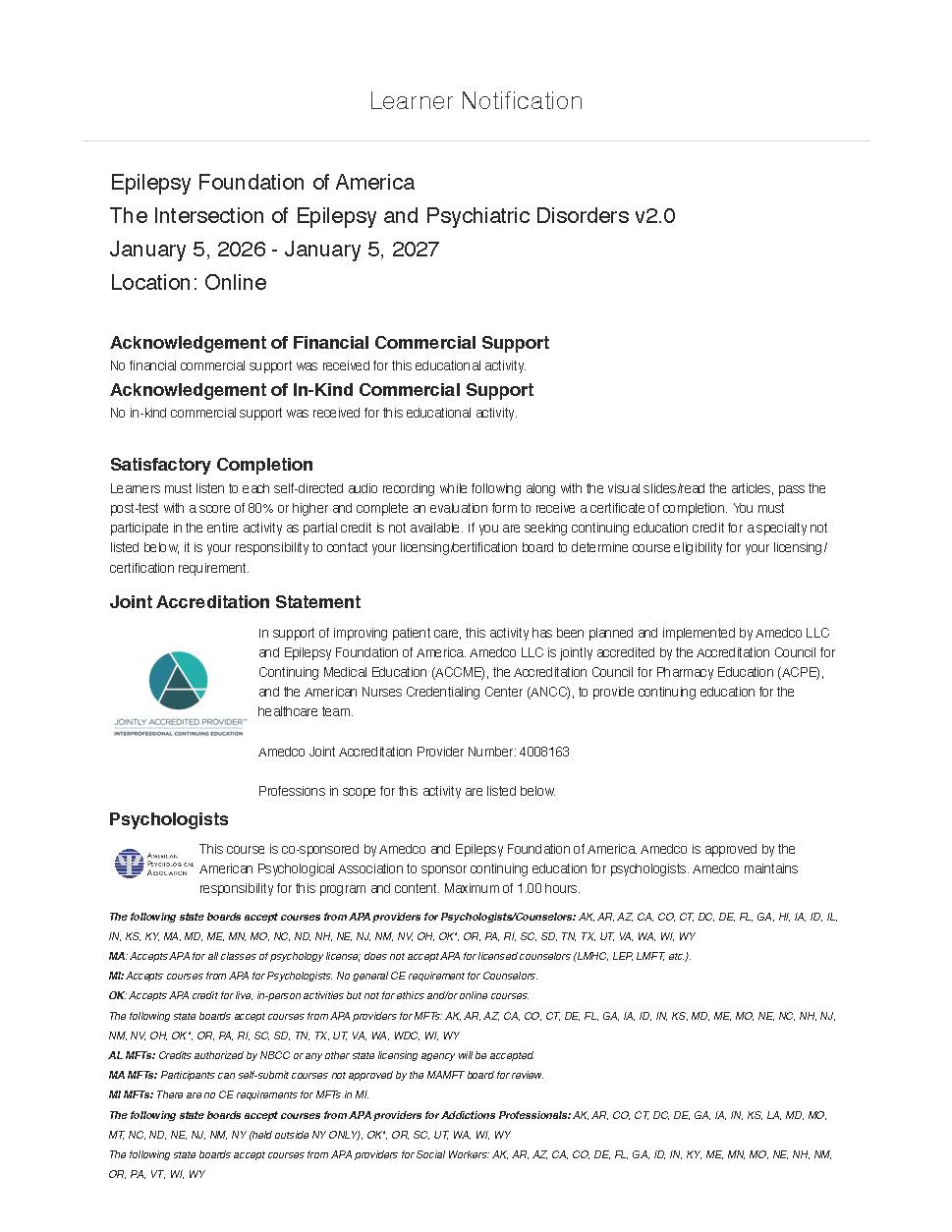
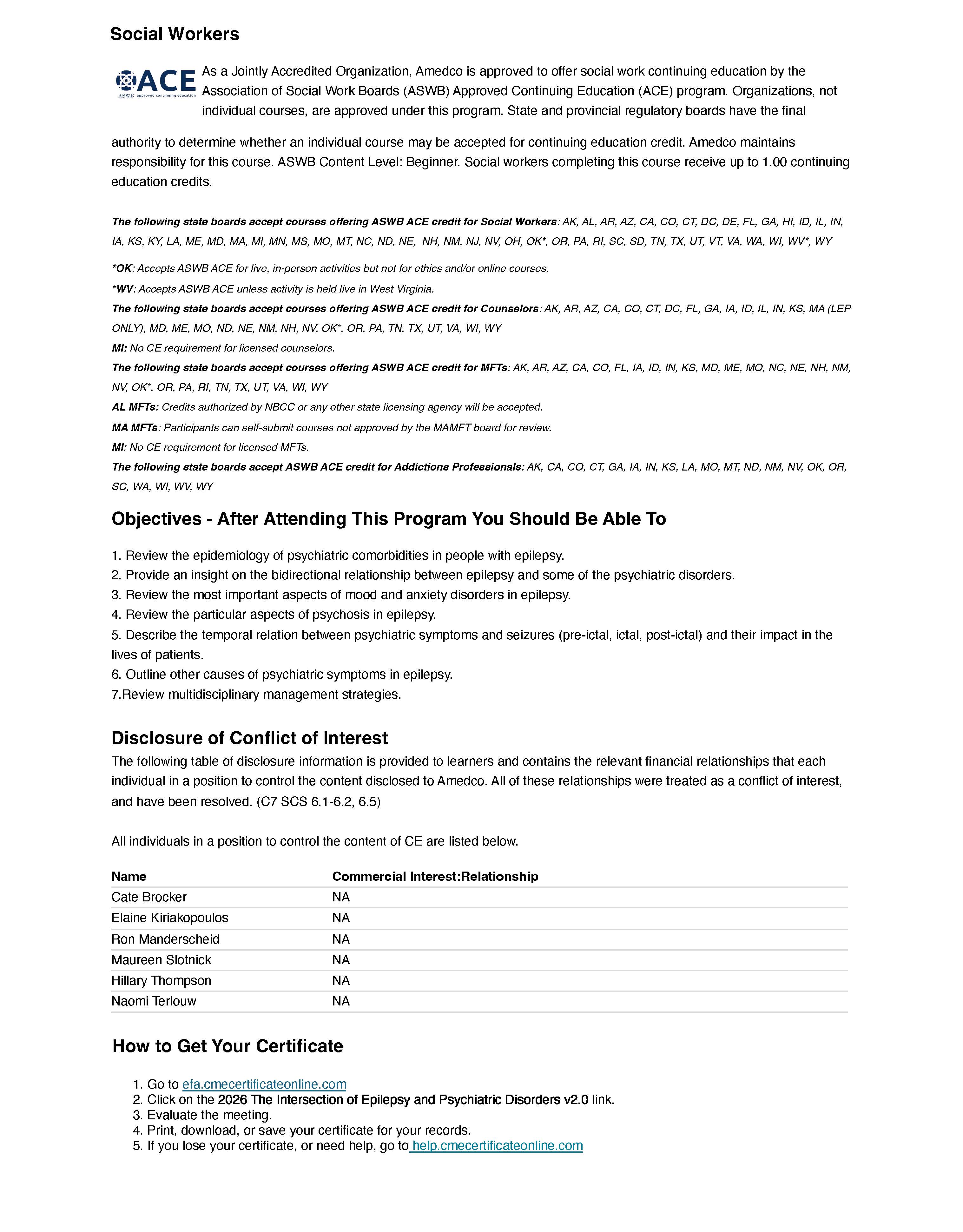
Detailed accreditation statements, eligible professions, credit designations, and state board acceptance information are provided in the Learner Notification: Amedco Continuing Education Accreditation and Credit Information document. Click the link below to review:
Learner Notification: The Intersection of Epilepsy and Psychiatric Disorders
This program is supported by the Centers for Disease Control and Prevention (CDC) of the U.S. Department of Health and Human Services (HHS) as part of a financial assistance award under cooperative agreement number 1U58DP0026256-04-00, CFDA 93.850, funded by CDC/HHS. The contents are those of the author(s) and do not necessarily represent the official views of, nor an endorsement, by CDC/HHS, or the U.S. Government.
Instructors must divulge at the beginning of the course any vested interest in any product, instrument, device or materials that may be used in the learning event.
The Epilepsy Foundation is committed to providing equal opportunities for all persons and does not discriminate or retaliate on the basis of race, color, national origin, religion, sex, sexual orientation, gender identity, marital status, age, disability, citizenship or legal immigration status, veteran status, or any other status protected by federal, state and local laws (“protected status”). The following individuals have been designated to receive inquiries or complaints regarding the Foundation’s anti-discrimination policy:
Employees contact:
Department Name: Human Resources
e-mail: [email protected]
Students, prospective students and third parties contact:
Department Name: Training
e-mail: [email protected]
You can find additional FAQ's about this learning portal on the Frequently Asked Questions page